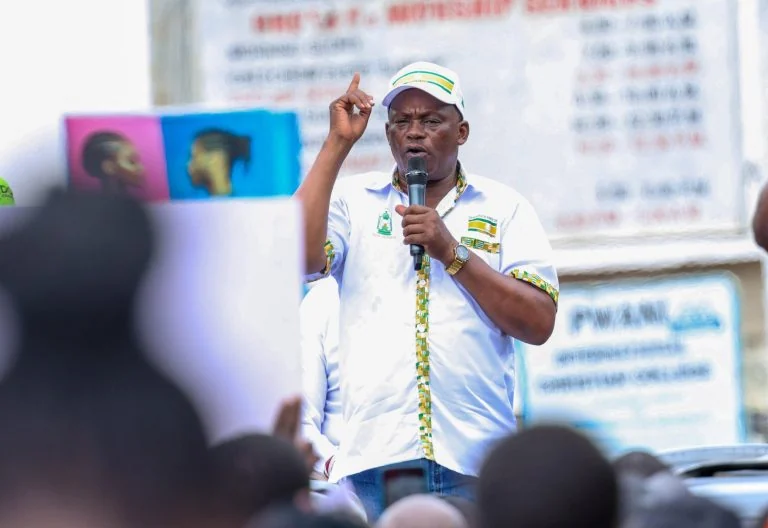
Former Attorney General Justin Muturi has challenged former Deputy President Rigathi Gachagua to identify politicians he claims are working with the government to undermine the United Opposition.
Muturi questioned the basis of allegations that some opposition parties and their members have been infiltrated by individuals allegedly acting on behalf of President William Ruto's administration.
In remarks shared on his X account on Monday, November 16, 2026, Muturi said he was not aware of the criteria being used to label political parties as moles or the authority behind such declarations.
ALSO READ
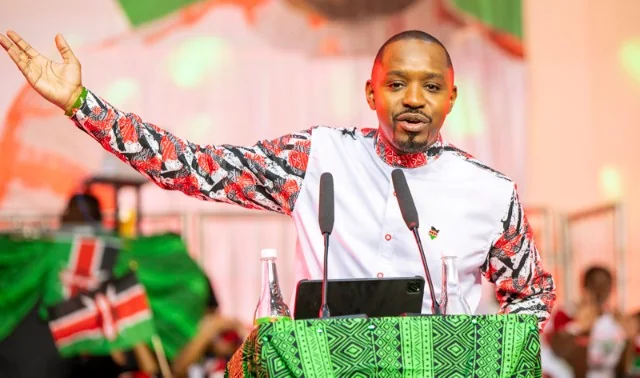
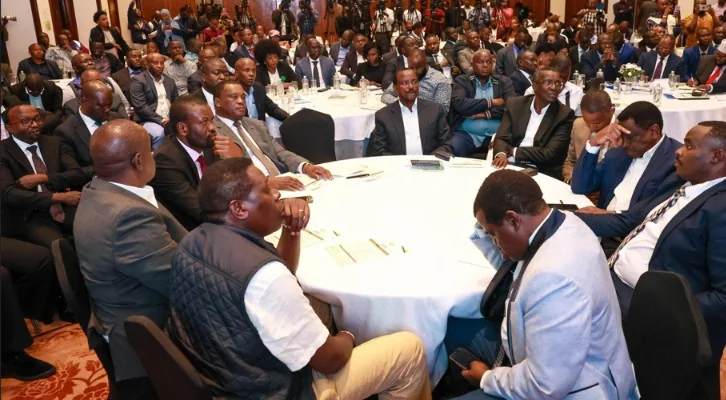
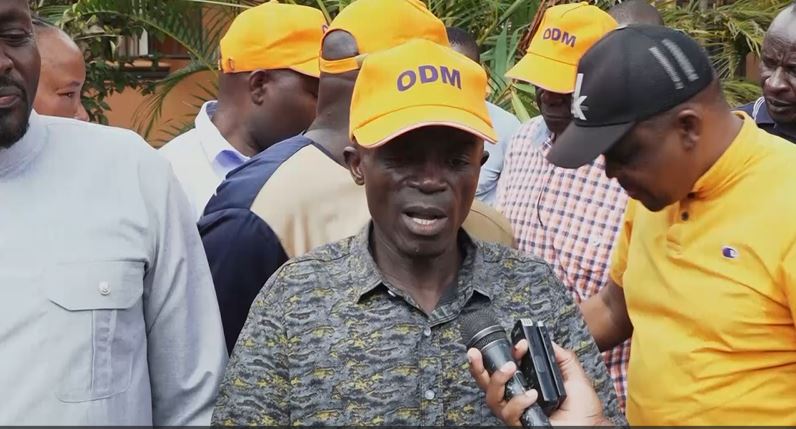
“I am not the Registrar of Political Parties, nor do I have the mandate to determine which party is a mole and which one is not,” Muturi said.
He challenged those making the accusations to provide specific evidence and identify the parties or individuals allegedly involved instead of making general statements that could create suspicion among opposition partners.
“If he has evidence that certain parties are moles, I challenge him to name them and explain the basis of his allegations instead of making sweeping statements that cast suspicion on other political players,” he added.
Muturi Questions Claims About Political Loyalty
Muturi also questioned what he described as inconsistency in the treatment of political leaders, citing remarks involving Nakuru Senator Tabitha Karanja.
He questioned whether the unnamed political figure had assumed the role of determining which leaders were loyal to President Ruto and which ones were allegedly working against the opposition.
“Are you now the modern-day Nyayo Meter, determining who is loyal to William Ruto and who is not, and deciding who is a mole?” he posed.
Muturi further questioned why the same political figure had previously criticised Karanja publicly in Nakuru before later appearing alongside her.
“Recently, you were publicly criticising Tabitha Karanja in Nakuru, but today you are standing together. What changed?” he asked.
Separately, during a Monday interview with a vernacular television station, Muturi said he had not witnessed suspicious conduct among opposition leaders during their political engagements across the country.
He cited meetings held in Garissa, Tana River, the Coast, Taveta, Western Kenya and Siaya, saying the leaders had continued working together on matters including preparations for the 2027 General Election and issues surrounding the Independent Electoral and Boundaries Commission (IEBC).
Gachagua Previously Warned Opposition About Alleged Moles
Muturi's remarks come months after Gachagua raised concerns about alleged government infiltration within opposition political parties.
On May 6, 2026, while speaking during a rally in Kandara, Murang'a County, the former Deputy President warned United Opposition principals to be cautious of individuals he claimed had been placed within their political formations to undermine their unity.
“Mimi nataka niambie principals ya United opposition, mkuwe very careful, katika vyama vyenu, kwa sababu ndani ya vyama vyenu Kasongo ameeka watu huko ndani,” Gachagua said.
He alleged that some individuals could appear to support the opposition while taking instructions from elsewhere.
Gachagua did not publicly identify the people he was referring to during the remarks.
Opposition Unity Faces Questions Ahead of 2027
The exchange comes as opposition leaders continue discussions on how to select a joint presidential candidate ahead of the 2027 General Election.
The United Opposition brings together political figures including Gachagua, Wiper leader Stephen Kalonzo Musyoka, former Interior Cabinet Secretary Fred Matiang'i, Muturi, Democratic Action Party-Kenya leader Eugene Wamalwa and other political leaders.
However, differences have emerged over the method of selecting the coalition's presidential flag bearer.
Kalonzo has advocated for negotiations and consensus among opposition principals, while Matiang'i has supported the use of a scientific opinion poll to determine the candidate.
Gachagua has also maintained that the presidential candidate should emerge through an agreement among the coalition's principals, insisting that the position does not necessarily have to go to him.
Muturi's latest remarks add another dimension to the discussions, highlighting concerns over trust, political loyalty and the need for mutual respect among parties seeking to work together ahead of the next election.
He has also dismissed suggestions of a personal fallout with Gachagua, maintaining that differences in political opinion should not be mistaken for hostility.
“Differences in opinion is not war,” Muturi said.