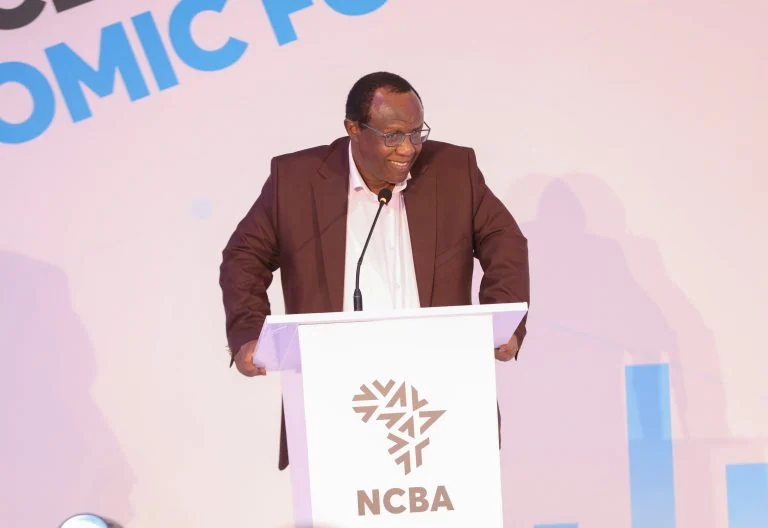
President William Ruto's economic adviser David Ndii has defended the government's priorities, saying its electoral mandate was to transform Kenya's economy rather than serve as the country's moral authority.
In a statement shared on his official X account on Monday, November 16, 2026, Ndii responded to criticism over corruption and the government's handling of state power, arguing that economic transformation was the central promise on which the administration sought public support.
“We did not seek electoral mandate to moralize Kenya. We sought a mandate for economic transformation. If you want moral guardians, elect them,” Ndii stated.
ALSO READ
His remarks followed criticism from an X user who questioned why the government appeared to shift responsibility when confronted with allegations of corruption, arguing that the administration had the power and resources to investigate wrongdoing.
Responding to the criticism, Ndii challenged the suggestion that the government had absolute control over all state institutions.
He argued that Kenya's constitutional framework distributes authority among different institutions, meaning that the government cannot exercise unlimited control over every public agency.
“Your theory of state power is flawed. The only governments with the kind of power you are imagining are absolute dictatorships. In constitutional democracy, power is decentralized,” he said.
Ndii also addressed the role of the National Police Service, describing it as operationally independent and arguing that its institutional independence should be understood within the country's constitutional framework.
“The police are easily the most corruptible institution in this country. Moreover, we ‘dont have the police.’ The police service is operationally independent,” he stated.
His comments have brought renewed attention to the relationship between the Executive and independent institutions, particularly regarding responsibility for investigating and addressing corruption.
The economic adviser's latest remarks also come amid continued debate over the government's Affordable Housing Programme, which he has previously defended as part of the administration's economic transformation agenda.
On October 24, 2026, Ndii argued that the programme was designed to promote an inclusive middle-class society rather than exclusively target the poorest households.
“Affordable Housing is not for the poor. It's inclusive middle-class housing that enables low-income people to enjoy same standard of living with the rest of us, including enabling their children to swim,” he said in an earlier post.
He maintained that the government's objective was to make quality housing accessible to people across different income levels.
However, the remarks attracted public debate over whether the housing units were affordable to low-income households.
The State Department for Housing subsequently offered a different perspective, saying the programme also caters for households earning below KSh20,000 per month through its social housing category.
Corruption and Accountability Debate Continues
Ndii's latest statement has renewed discussion about the relationship between economic development and public accountability.
While he maintains that the government's electoral mandate centred on economic transformation, critics continue to question how the administration is addressing corruption and the responsibilities of state institutions.
His comments have also raised questions about how Kenyans should assess government performance, including whether economic delivery and accountability should be viewed as separate or complementary responsibilities.
The debate comes as the government continues implementing major economic programmes, including affordable housing, while facing public scrutiny over governance, institutional independence and the management of public resources.