Climate scientists are calling for weather and climate information to be treated as a strategic public good as Kenya strengthens efforts to prepare for floods, droughts and other climate-related risks.
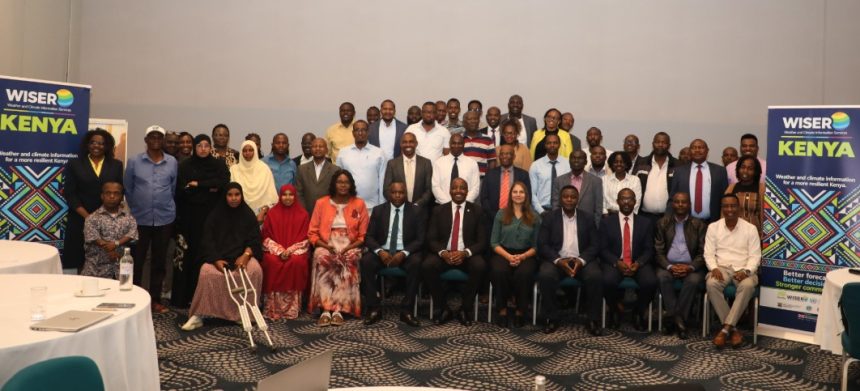
The call was made during the WISER Kenya Phase III kick-off workshop, which brought together government agencies, international development partners and community representatives to improve the use of climate information in planning and disaster preparedness.
Acting Director General of the Kenya Meteorological Service Authority (KMSA), Edward Muriuki, said stronger climate information services were essential to adaptation, resilience and sustainable development.
ALSO READ

“This requires an integrated approach that connects scientific knowledge with policy formulation, planning, budgeting, implementation and accountability,” Muriuki said.
He said the third phase of the Weather and Climate Information Services (WISER) programme aligned with national efforts to strengthen early-warning systems and ensure that climate information informs decisions at both national and county levels.
Muriuki cited Climate Outlook Forums and Participatory Scenario Planning as important platforms for translating scientific forecasts into sector-specific advice and practical preparedness measures.
He added that collaboration among national institutions, county governments, technical agencies and communities had supported capacity development, participatory climate planning and the production of climate information tailored to local needs.
The project’s areas of focus include drought monitoring, flood forecasting, hydrological observations and community engagement to generate evidence that can inform policy and institutional improvements.
Muriuki said Phase III should build on existing work by institutionalising successful approaches, improving operational coordination and embedding climate information into established government systems.
Acting Chief Executive Officer of the Water Resources Authority (WRA), CPA James M. Mburu, said Kenya continued to face serious climate challenges, including destructive floods and prolonged droughts.
“These are no longer distant projections, they are our present reality,” Mburu said, warning that the events threatened food security, disrupted economic activity and placed pressure on water resources.
He said WISER Kenya Phase III offered an opportunity to strengthen collaboration among institutions and improve the hydrometeorological monitoring network used for flood forecasting, early warnings, flood-risk mitigation and sustainable water-resource management.
Mburu said disaster management had often been reactive, with emergency resources deployed after droughts intensified or rivers burst their banks.
Through the WISER initiative, he said, the focus was shifting from conventional weather forecasting towards action-based and impact-based early warnings.
He added that improved forecasting tools could give authorities more time to manage water allocation, issue early warnings on water abstraction, protect vulnerable catchments and safeguard infrastructure before disasters occur.
The workshop brought together community representatives from Garissa and Tana River counties alongside officials from the United Kingdom’s Foreign, Commonwealth and Development Office (FCDO), the UK Met Office, the World Meteorological Organization (WMO), KMSA, the National Disaster Management Authority (NDMA) and the Kenya Red Cross Society (KRCS).
The WISER programme is funded by the UK FCDO, managed by the UK Met Office and led by the WMO, according to the information provided for the workshop.
It brings together national institutions, consortium partners, county governments and communities to strengthen the use of weather and climate information for preparedness and early action in Garissa and Tana River counties.
The initiative aims to improve how forecasts inform decisions, helping communities and institutions prepare for climate-related risks and reduce potential damage to lives, livelihoods and infrastructure.