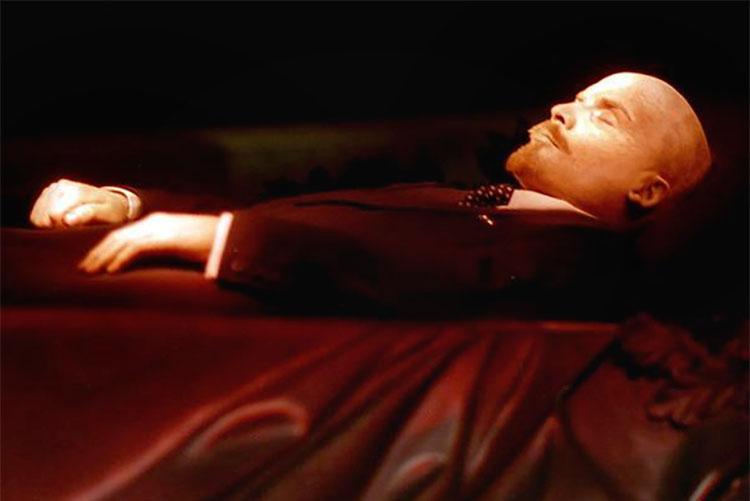
More than a century after his death, the body of Russian revolutionary leader Vladimir Lenin remains on public display in a mausoleum at Moscow’s Red Square, where specialists continue working to preserve his remains.
Lenin, who helped establish the Soviet Union, died on January 21, 1924, aged 53. Instead of giving him a conventional burial, Soviet authorities chose to preserve his body and display it as a symbol of the revolution.
Thousands of mourners reportedly queued to view his remains following his death. What was initially expected to be a temporary display eventually developed into a long-term preservation project, leading to the construction of the mausoleum where his body remains today.
ALSO READ
The preservation work required scientists to develop specialised techniques to slow decomposition while maintaining Lenin’s physical appearance.
Boris Zbarsky and Vladimir Vorobyov were among the scientists involved in developing the preservation methods. Unlike conventional embalming, the process requires continuous monitoring and specialised treatment.
Experts inspect the body for changes in skin colour, moisture and texture, while environmental conditions inside the mausoleum are carefully controlled. The preservation programme involves periodic treatments using specially prepared chemical solutions. Substances such as glycerol and potassium acetate have been associated with the process, helping specialists maintain the condition of the body's tissues.
The work also focuses on preserving Lenin’s physical appearance and shape. Over the years, scientists have developed techniques involving artificial materials to support or replace deteriorating tissue. Research into the preservation methods has documented the use of substances including paraffin, glycerin and carotene, alongside detailed monitoring techniques such as microscopic photography.
The expertise developed through Lenin’s preservation project has also influenced efforts to preserve the remains of other communist leaders, including Vietnam’s Ho Chi Minh and North Korea’s Kim Il-sung and Kim Jong-il. Despite the scientific effort involved, Lenin’s continued display remains controversial.
Debate continues over whether his body should remain in the mausoleum or eventually be buried. More than 100 years after his death, the preservation project remains an unusual intersection of science, history and politics, reflecting the enduring legacy of a revolutionary leader whose remains have outlived the Soviet Union itself.